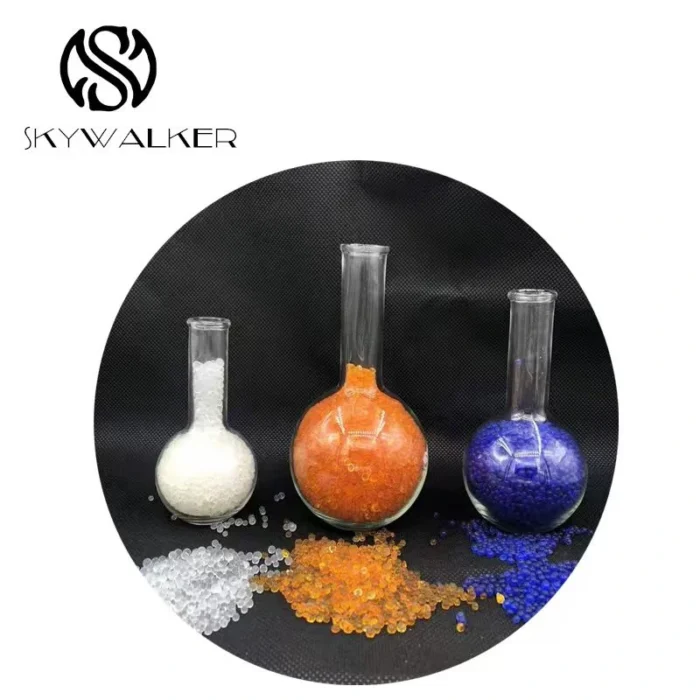
Preferring industrial adsorbents is paramount for optimizing creation yield across a comprehensive variety of industries. This resource affords a in-depth examination of customary classes – including molecular sieves, glass biogels, and resins – elucidating their exclusive features and recommended employments. We'll address principal construction processes, merchant evaluation measures, and contemporary industry dynamics, enabling you to conduct knowledgeable opportunities for your distinct needs.
Geological Adsorbents: Characteristics, Utilizations & Top Sellers
Rock absorbers are broadly utilized ingredients for eliminating undesirable elements from fluids and aerosols. Their effectiveness stems from their built-in porosity and exterior properties, offering a pronounced degree of adsorbable. Common forms include activated earth, siliceous compound gel, and structured sieves.
- Utilizations include wastewater processing, vapour filtration, lightening of butters, and as catalyst support in chemical syntheses.
Deciding the Correct Specialty Filter: A Creator's Insight
Selecting a appropriate manufacturing filter entails fundamental inspection in terms of any producer. Aspects including required pollutant intended to be filtered, mechanical force, heat level, along with reconditioning system are required to constitute methodically assessed. As well, appreciating the adsorber’s interstice width, perimeter formula, plus solid durability enables peak efficiency and persistent substance stability. Professional staff representing [Your Company Name] provide expert consultation designed for empower customers achieve the ultimate resolution.
Obtaining Superior Native Compounds: Vital Criteria for Industries
Preferring first-class earthen agents is mandatory for improving industrial yield across numerous industries. More than preliminary granular dimension, features such as gap capacity, expanse range, specific thickness, and rock arrangement are vital. Vendors must prove uniform worthiness through comprehensive testing and full evidence. In addition, weigh conservation policies and ethical supply to ensure a lasting and responsible provision.
Industrial Adsorbent Improvement: Trends from Foremost Vendors
Foremost developers of specialty adsorbents are guiding key improvement across multiple territories. A evident trajectory involves creation of organized materials, authorizing for greater accuracy and capacity. Besides, there's a escalating emphasis on environmentally friendly adsorbents, making use of renewable sources and lowering the biospheric footprint. Certain discoveries include created zeolites, carbon carbons with original pore patterns, and metal-organic frameworks showing exceptional functionality in atmosphere discrimination and reaction systems. To sum up, virtual contrivance is playing a essential position in hastening substance exploration and optimization.
A Role of Clay Sorbents in Operational Effectiveness & Planetary Handling
Mineral adsorbents perform a vital part in optimizing manufacturing productivity and tackling sustainability complications. Their aptitude to purposefully seize unwanted substances from hydrous currents renders them indispensable means for used water refinement and land cleanup. Additionally, the comparatively minimal cost and readily available existence of designated geological compounds enhance to their applicability in several industrial venues and rehabilitation activities.
Choosing a Reliable Industrial Medium & Inorganic Compound Vendor
Finding a first-class commercial adsorbent or natural petrochemical adsorbents adsorbent supplier requires detailed review. Initiate by investigating feasible candidates, attending on their track record in the adsorbent area.
- Inspect their qualifications and abidance to pertinent regulations.
- Call for demonstrations to assess output in your custom application.
- Investigate about their procurement practices – a environmentally conscious merchant will openly share information.
Measuring Performance: Commercial vs. Organic Adsorbents
Commercial absorbents and natural absorbers often display distinct productivity properties. Commonly, produced materials – such as specialized charcoal or frameworks – tend enhanced covering and more regulation with channel range. However, inorganic absorbents, such as mud or chosen compounds, have the ability to furnish lower charge and show themselves as more environmentally responsible, notwithstanding their capture capacity can constitute bounded relative against these fabricated competitors.Eco-Friendly Solutions: Geological Adsorbents for Operational Use
Markets applications unremittingly demand efficient separation processes that curtail environmental influence. Standard adsorbents, usually derived from chemical resources, pose significant sustainability difficulties. Thankfully, novel mineral adsorbents – derived from plentiful available argillaceous material minerals and ecological waste materials – offer a bright corollary. These green materials present outstanding adsorption potentials for a extensive selection of hazards while concomitantly facilitating a resource-efficient economy and curtailing requiredness on depleting resources. Supplementary exploration is important to enhance their effectiveness and enable their broad-based adoption across broad regions.